
What Is Earnest Money? 6 Common Home Buying & Selling Questions Answered

6 Questions Buyers & Sellers Ask Me All the Time
I took this conversation outside for a more casual breakdown of what these terms actually mean.
01 What Happens After an Offer Is Accepted on a House?
Once a seller accepts your offer, the transaction generally moves into escrow. Escrow is a neutral third party that helps hold funds and documents and coordinates parts of the transaction until closing.
For many financed purchases, escrow may be around 30 days, although the actual timeline depends on the loan, property and terms negotiated in the purchase agreement.
What surprises many first-time buyers is how busy those first days can feel. Your earnest money deposit, home inspection, homeowners insurance, loan documentation and other deadlines can begin moving almost immediately.
The first part of escrow can feel busy.
That does not necessarily mean something is going wrong. A lot of the buyer's work happens early. Once inspections, financing and other early milestones are underway, the middle of escrow may feel noticeably quieter.
02 What Is Earnest Money?
Earnest money — also called an earnest money deposit or EMD — is money a buyer deposits after entering into a purchase agreement to show that they are moving forward with the transaction.
In many California transactions, you may see an earnest money deposit around 3% of the purchase price, although the actual amount and timing are negotiable and depend on the contract.
One of the most important things buyers should understand is that earnest money is generally not an extra fee on top of the purchase. If the transaction closes, the deposit is typically credited toward the buyer's funds due in the transaction.
How much earnest money will I need?
The amount depends on the offer and the transaction. Talk through the deposit amount before submitting your offer so you know how much money will need to be available.
Where does earnest money go?
The deposit is generally delivered to escrow rather than directly to the seller and held according to the terms of the transaction.
03 Do I Need a Realtor® to Buy a House?
No. A buyer is not automatically required to use a Realtor® simply because they want to purchase a home.
But there is a lot happening between finding a property and getting the keys: contracts, financing, inspections, disclosures, appraisal, contingency deadlines, negotiations and closing.
Buyer representation gives you someone whose role is to help you understand those pieces, evaluate the transaction and negotiate on your behalf.
Especially if this is your first home...
The value is not simply having someone unlock a house. It is having someone help you understand what you are signing, what deadlines are approaching, what questions to ask and what options you may have when something unexpected comes up.
04 Do Sellers Have to Fix Everything After a Home Inspection?
No. A home inspection does not automatically mean a seller has to repair everything the inspector identifies.
The inspection helps the buyer learn more about the property's condition. Depending on the purchase agreement and what the inspection uncovers, the buyer may request repairs, ask for a credit or another concession, continue with the purchase as-is, or exercise applicable contractual rights.
The Buyer Can Ask
A buyer may submit a request for repairs or propose another solution after reviewing the inspection findings.
The Seller Can Negotiate
The seller may agree, decline or negotiate the request depending on the property, contract and circumstances.
An inspection creates information — not an automatic repair list.
05 What Are Seller Concessions?
Seller concessions are costs the buyer asks the seller to contribute toward as part of the negotiated transaction, subject to the loan program and contract.
For example, imagine a buyer offers $800,000 for a home and requests $10,000 in seller concessions toward allowable closing costs or an interest-rate buydown.
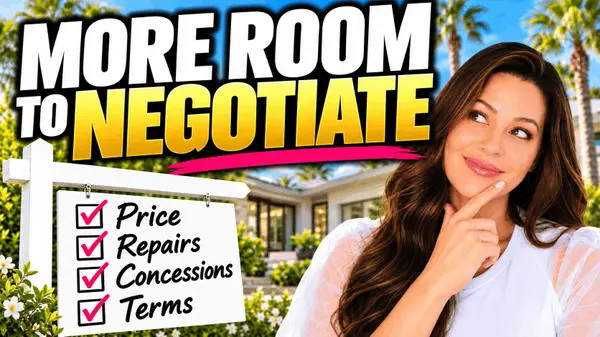
Price is only one part of an offer.
A seller should look at the entire package: purchase price, requested concessions, financing, contingencies, closing timeline and other terms.
An $800,000 offer with a $10,000 seller contribution does not produce the same seller proceeds as an $800,000 offer without that contribution.
Seller concessions can also become part of a property's marketing strategy in some markets. If buyers are especially sensitive to monthly payments, helping with allowable closing costs or an interest-rate buydown may be more meaningful to a buyer than another type of incentive.
06 What Do You Have to Disclose When Selling a House?
California residential sellers may have substantial disclosure obligations. Depending on the property and transaction, common forms can include the Transfer Disclosure Statement (TDS) and Seller Property Questionnaire (SPQ), along with other required disclosures.
These forms ask detailed questions about the property and what the seller knows about its condition, history and certain features.
Do not rush through your disclosures.
If you have lived in a property for years, you may not remember every repair, leak, improvement or issue the moment the forms arrive. Give yourself time to think through the property's history.
Some sellers also choose to complete a pre-listing home inspection. It can reveal conditions the seller may not know about — such as issues in a crawl space or attic — and provide more information before the property reaches the market.
Real Estate Makes More Sense When You Understand the Next Step
Buyers often think they need to understand the entire transaction before they begin. Sellers sometimes feel the same way.
You really do not.
What matters is understanding the decision directly in front of you: what your earnest money is for, what happens after your offer is accepted, what an inspection does, what a concession means, and what information needs to be disclosed.
Then you move to the next step.
So, what's the story?
You do not need to become a real estate expert to buy or sell a home.
You do want to understand what you are agreeing to, what happens next and what choices you have along the way.
That's one of the things I spend a lot of time doing in my buyer and seller consultations — taking real estate language and turning it into plain English so you can make your decisions with more information and less confusion.
Start With the Information You Need
Whether you're researching your first home or preparing to sell, start by looking at current Southern California homes or getting a better idea of what your property may be worth.
Categories
Recent Posts